AI Claims Platform on AWS (Cognizant Property Insights)
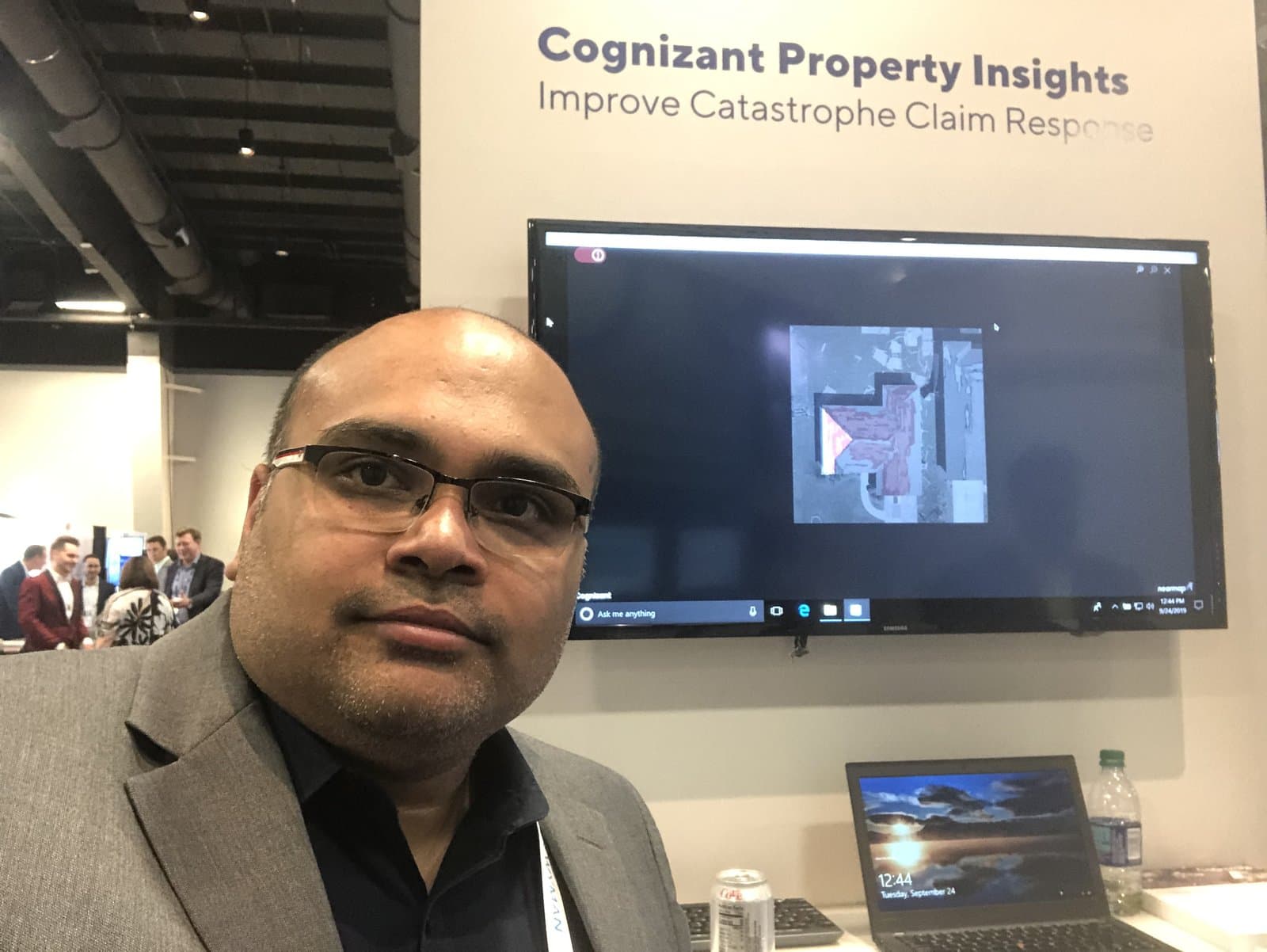
Incubated a $6M-funded deep-learning catastrophe-claims startup inside the Cognizant Launchpad Accelerator; grew the team from 4 to 25 and shipped a web + mobile platform on AWS for claims managers and adjusters; onboarded 6 insurers in beta and converted 3 to paying customers.
- $6M / 2 yrs
- Funding
- 4 → 25
- Team
- 6 → 3 insurers
- Beta → paying
Business context
Property claims after catastrophe events were assessed almost entirely by manual adjuster visits. Deep learning had just become practical for damage assessment from imagery, and Cognizant's accelerator offered a path to build a product — not a services engagement — around it.
The challenge
Prove, on startup funding and timelines, that an AI claims product could win real insurer customers — building the team, the platform, and the commercial model from zero simultaneously.
Constraints
- Startup economics inside an enterprise: $6M for two years, milestone-gated
- Team built from scratch — 4 to 25 across full-stack, UI/UX, data science, ML engineering, and product
- Insurer procurement cycles far longer than accelerator funding horizons
- Production data pipelines needed before customers existed to supply data
The solution
A web and mobile AI-powered claims platform on AWS serving claims-manager and adjuster personas, built on deep-learning damage models and an AWS data pipeline. Product strategy and product P&L were owned in-house; a structured beta program brought 6 insurers in with explicit conversion gates to commercial contracts.
Architecture
- Deep-learning damage-assessment models
- AWS data pipeline for imagery ingestion and model serving
- Web application for claims managers; mobile app for field adjusters
Architecture diagram coming soon.
Product decisions I owned
- Serve two personas from one platform — the claims manager's triage view and the adjuster's field workflow — so the product sold to operations, not just innovation teams.
- Run beta as a conversion funnel with commercial gates, not a free pilot program; 3 of 6 betas became paying customers.
- Build the data pipeline as a first-class product asset, making each new insurer cheaper to onboard than the last.
Lessons learned
- Betas without commercial gates are demos — the conversion discipline is what made the funding case.
- Hiring the first data scientists and the first salespeople at the same time felt premature and was exactly right.
- An incubated startup lives or dies on its P&L story to the parent — reporting like a business bought the runway.
If I rebuilt this with AI today
Foundation vision models would replace most of the bespoke training pipeline, collapsing the two-year model-building phase into months — the scarce asset today isn't the model, it's the labeled claims-outcome data and the adjuster workflow the platform earned.